
WHAT IS AN INDIGENOUS PROTECTED AREA?
What is an Indigenous Protected Area?
For tens of thousands of years, Aboriginal and Torres Strait Islander peoples have cared for Country through knowledge, responsibility and a deep cultural connection to the land and sea.
Today, that ancient tradition continues through Indigenous Protected Areas (IPAs), one of Australia’s greatest conservation success stories. Together, they protect more than 100 million hectares of land and sea while supporting culture, biodiversity, Indigenous employment and stronger communities.
Yet despite their significance, many Australians have never heard of an IPA, or aren’t quite sure what one is.
This feature explores the story behind Indigenous Protected Areas, where they came from, how they work, and why they matter, not only to Traditional Owners, but to every Australian.
So, what exactly is an Indigenous Protected Area?
An Indigenous Protected Area is an area of land or sea that Traditional Owners have voluntarily dedicated to long-term conservation and cultural stewardship.
These are places where Aboriginal and Torres Strait Islander people continue one of the oldest living traditions on Earth: caring for Country.
Every IPA is unique, reflecting the landscapes, cultures and aspirations of the Traditional Owners who manage it. But they all share a common purpose: protecting the natural and cultural values of Country while supporting healthy communities, strong cultures and thriving ecosystems.
Traditional Owners care for IPAs using a combination of thousands of years of cultural knowledge and contemporary conservation science. From cultural burning and threatened species monitoring to protecting sacred places, managing invasive species and passing knowledge to younger generations, Indigenous Protected Areas recognise that caring for Country means caring for everything that depends on it.
Today, IPAs form one of Australia’s largest and most significant conservation networks, stretching from the deserts of Central Australia to tropical rainforests, remote coastlines, islands and Sea Country.
See it in action
Culture and Connection to Country
Country is more than a landscape. It’s identity, language, history and responsibility. Watch how Traditional Owners describe their connection to Country and why caring for it continues to be passed from one generation to the next.
▶ Watch the BushTV Culture and Connection to Country Documentary
How did Indigenous Protected Areas begin?
Long before there were national parks or conservation reserves, Aboriginal and Torres Strait Islander peoples were caring for Country through systems of knowledge, law and responsibility that had been passed from generation to generation.
For tens of thousands of years, Traditional Owners managed landscapes with practices such as cultural burning, sustainable harvesting, protecting sacred places and maintaining healthy waterways. Caring for Country wasn’t simply about conserving nature. It was, and continues to be, a way of life.
In the late twentieth century, governments began recognising that Traditional Owners had an essential role to play in protecting Australia’s unique landscapes and biodiversity. Rather than creating a new idea, Indigenous Protected Areas built on an ancient one: supporting Aboriginal and Torres Strait Islander people to continue caring for Country on their own terms.
The first Indigenous Protected Area, Nantawarrina, was declared in the northern Flinders Ranges of South Australia in 1998. It marked the beginning of a new conservation partnership between Traditional Owners and the Australian Government.
Since then, the IPA network has grown to become one of Australia’s largest conservation achievements, with Indigenous Protected Areas now protecting more than 100 million hectares of land and sea across the country.
Today, every IPA is unique, reflecting the aspirations, culture and priorities of its Traditional Owners. Together, they form a vital part of Australia’s National Reserve System while strengthening culture, creating employment, protecting biodiversity and ensuring knowledge continues to be passed to future generations.
What do Indigenous Rangers do?
Every Indigenous Protected Area is different, and so is the work of the Rangers who care for it.
On any given day, Indigenous Rangers might be monitoring threatened species, managing invasive weeds and feral animals, protecting sacred sites, surveying waterways, restoring habitats, or taking young people and Elders out on Country to share cultural knowledge.
Much of this work combines traditional knowledge with modern conservation science. Rangers use satellite imagery, GPS technology and ecological monitoring alongside cultural practices that have been passed down through generations.
It’s challenging, hands-on work, but it’s also deeply rewarding. Every task contributes to healthier Country, stronger communities and the continuation of one of the world’s oldest living knowledge systems.
One of the best-known examples is Right Way Fire.
For thousands of years, Aboriginal people have used cool, carefully planned cultural burns to look after Country. These burns reduce the risk of destructive late dry season bushfires, protect important habitats, encourage new growth and create healthier landscapes for people and wildlife alike.
Today, Indigenous Rangers continue this practice using both traditional knowledge and modern technology, demonstrating that caring for Country is not only about protecting the past, but also about building a more resilient future.
Watch our BushTV feature on Right Way Fire and discover how Indigenous Rangers are using cultural burning to care for Country the right way.
Country is alive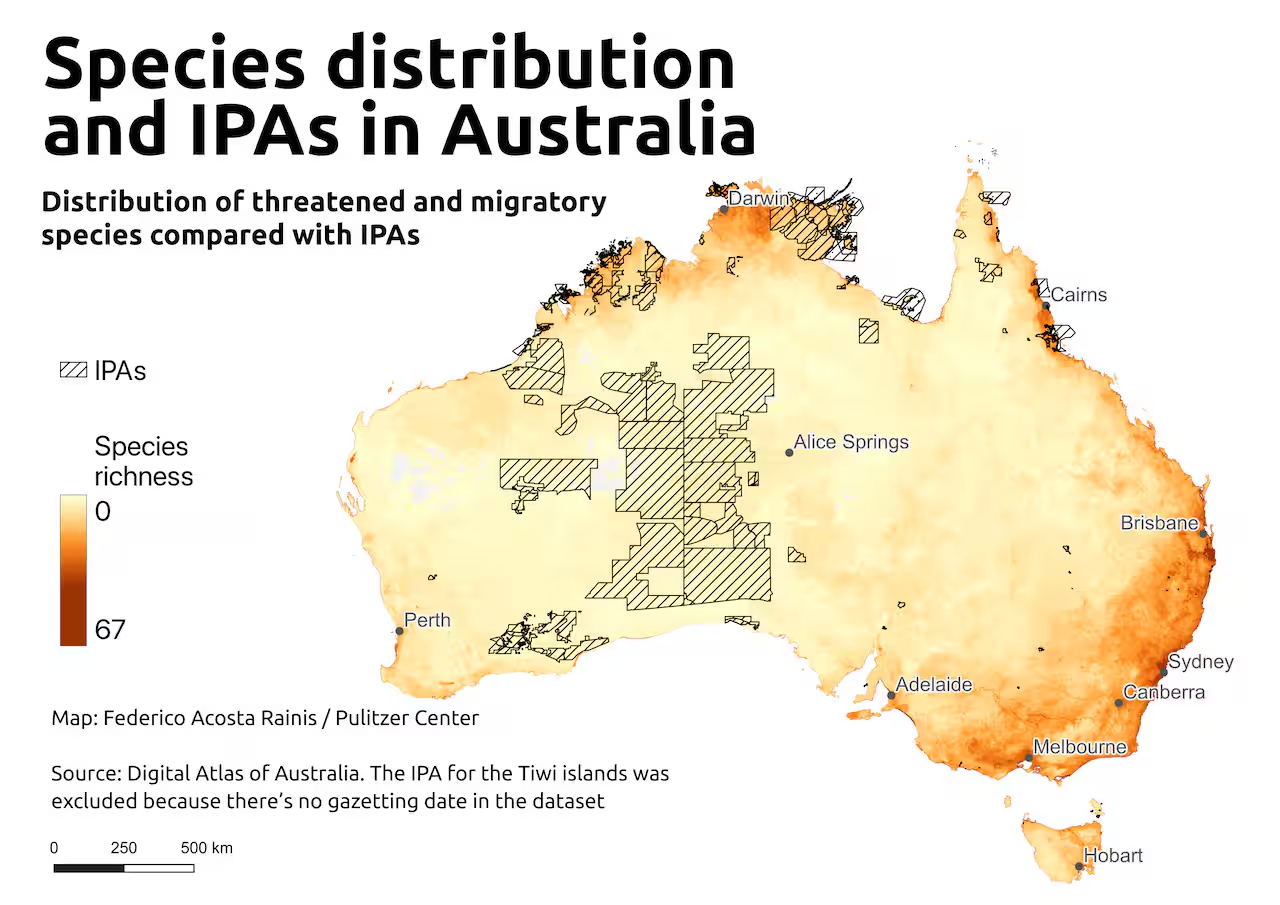
An Indigenous Protected Area isn’t simply a place on a map. It’s a living landscape.
Across Australia, IPAs protect deserts, tropical rainforests, wetlands, islands, coastlines and Sea Country. They are home to thousands of native plants and animals, many found nowhere else on Earth.
Healthy Country supports healthy wildlife. Healthy wildlife supports healthy ecosystems. And healthy ecosystems help sustain communities for generations to come.
Passing knowledge to the next generation
One of the most important roles of Indigenous Protected Areas can’t be measured on a map.
Across Australia, Elders are taking young people back onto Country, sharing language, stories, cultural practices and responsibilities that have been carried for thousands of years.
Every trip onto Country is an opportunity to strengthen identity, confidence and connection.
When knowledge is shared, Country remains strong.
Sea Country
For many Traditional Owner groups, Country doesn’t stop at the shoreline.
Sea Country includes reefs, islands, mangroves, tidal flats, estuaries and open ocean. Indigenous Rangers monitor marine wildlife, protect turtle and seabird nesting sites, manage marine debris and work alongside scientists to understand changing ecosystems.
Looking after Sea Country is every bit as important as caring for land.
Today, Indigenous Rangers and Traditional Owners are working alongside scientists to monitor coral reefs, protect turtle and dugong populations, respond to climate change and ensure these extraordinary environments remain healthy for future generations. Their work demonstrates that caring for Sea Country is strongest when thousands of years of Traditional Knowledge are combined with contemporary science.
Watch our BushTV feature exploring how Torres Strait communities are protecting one of Australia’s most remarkable marine environments.
Looking ahead
The story of Indigenous Protected Areas isn’t just about protecting landscapes.
It’s about recognising that the oldest living cultures on Earth continue to hold knowledge that benefits all Australians.
Every Indigenous Protected Area represents a commitment to Country, culture and future generations.
As Australia faces the challenges of biodiversity loss, climate change and caring for our unique environments, Indigenous Protected Areas demonstrate that some of the most effective conservation solutions have been here all along.
Together, Traditional Owners, Indigenous Rangers and communities are continuing a story that began tens of thousands of years ago.
And it’s a story that’s only just beginning.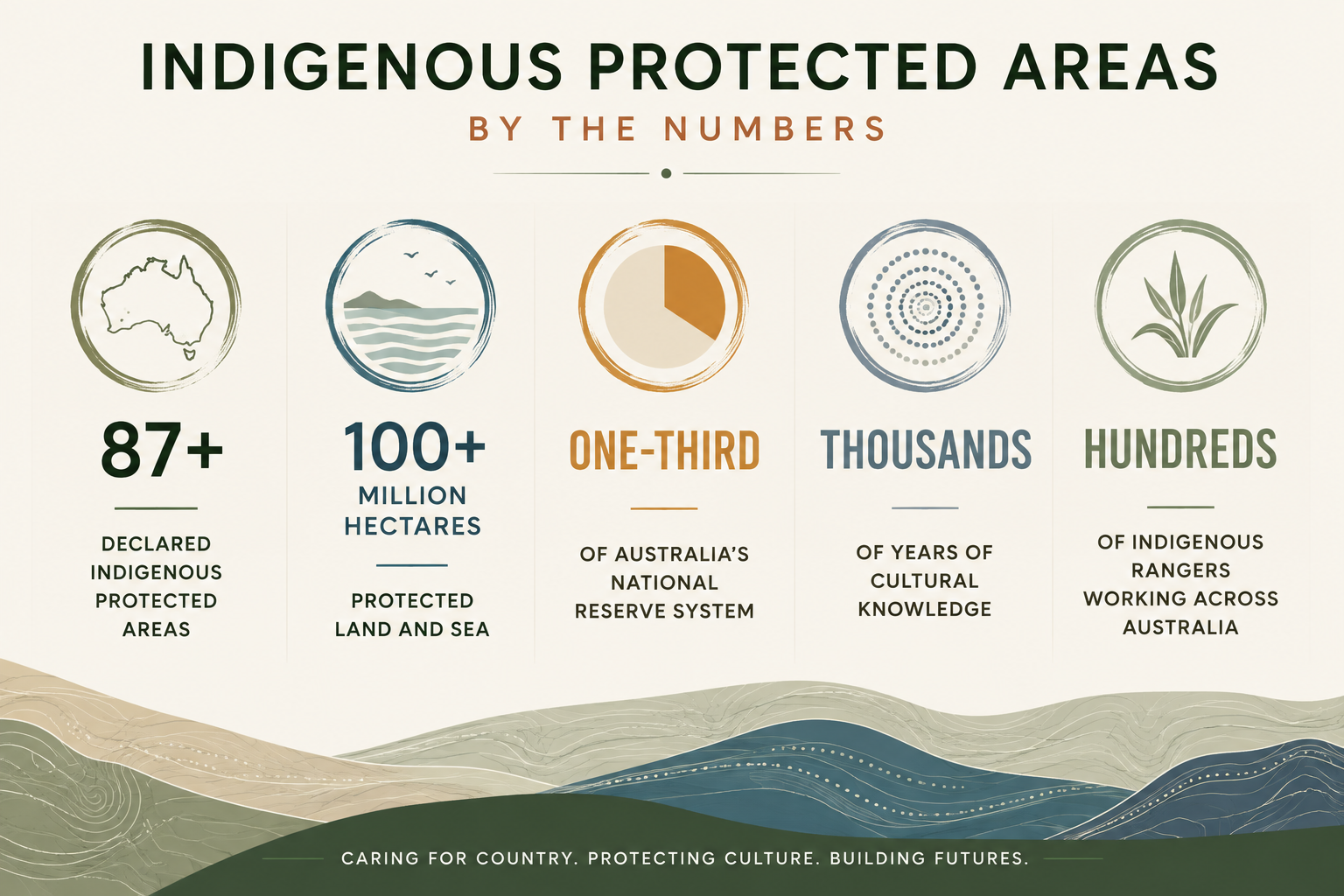
No Comments