
Stamping It Out
Yamatji leader Kyalie Moore is taking her fight against family violence across Australia.
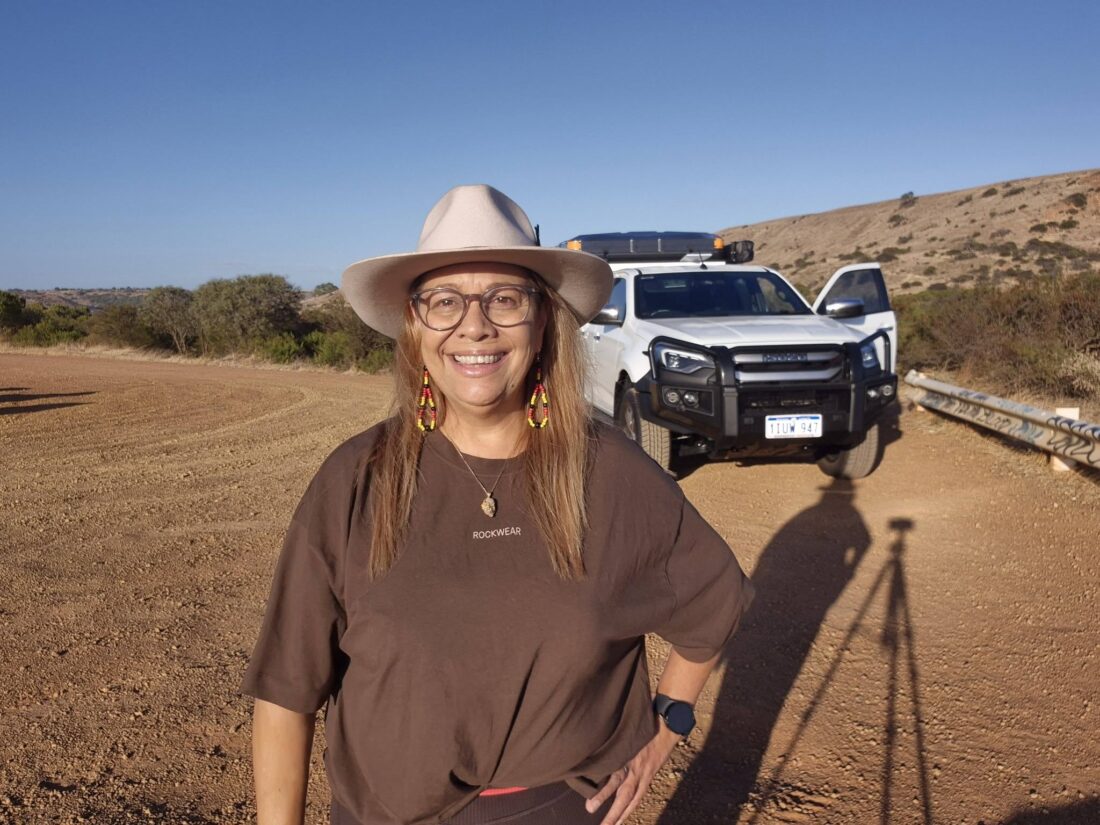
At first light in Geraldton, high on a windswept lookout above Chapman Valley, Kyalie Moore stood alone with her tripod, waiting for the sun to lift over Country. She had planned to film a short message to mark the next chapter of her national journey. Instead, a gust of wind sent the tripod crashing to the ground, cracking her phone screen.
For a moment she let herself feel it.
“I just felt alone,” she says. “And then I corrected myself. No one’s coming to save you. Get up and keep going.”
That resolve defines Moore’s work.
A Yamatji Nyarlu, counsellor, family therapist and Bachelor of Psychology graduate, Moore has spent nearly two decades in the family, domestic and sexual violence sector. She has supervised men’s behaviour change programs, trained frontline workers and supported victim survivors across Western Australia. Now she is taking that experience nationwide.
“I’m going nationwide,” she says. “I’m delivering the Safe and Together model and the Southern Cross model and supporting communities to create safer outcomes for families.”
 The urgency is undeniable. One in four Australian women has experienced violence by an intimate partner since the age of 15. Aboriginal and Torres Strait Islander women are hospitalised due to family violence at dramatically higher rates than non Indigenous women. Behind those statistics sit stories rarely told with dignity.
Moore knows that weight. In a recent interview circle, a woman she had known for years finally shared the depth of her trauma.
“She survived extreme violence,” Moore says quietly. “She escaped. She sought help. And years later she is still navigating a system that hasn’t delivered justice.”
“You have to carry that,” she adds.
Moore’s campaign is called Stamp It Out. To some it sounds forceful. To her it is cultural memory.
“In our culture, we dance. We stamp our feet when we tell stories. We stamp our feet when we call in the rain,” she explains. “When people hear ‘stamp it out’ they think it’s aggressive. But culturally, stamping is powerful. It’s collective.”
 She imagines communities standing in a circle, facing outward, stamping their feet together so the vibration carries across Country.
“If we want to stop family violence in our communities, we need to be speaking the language of our people.”
Her training reflects that principle. Moore is an accredited trainer in the internationally recognised Safe and Together model, which centres on children’s safety and perpetrator accountability. She co-designed the culturally informed Southern Cross model with three Aboriginal men to support safe engagement with men who use violence. She has also written a brief intervention program to enable Aboriginal organisations to lead the work themselves.
This is not advocacy at a distance. It is a practical systems change delivered face-to-face.
Moore’s journey is supported by three Western Australian organisations aligned in purpose.
DV Assist, which provides free counselling and recovery support for survivors of family, domestic and sexual violence, is sponsoring her to promote its services across the state. Victim survivors can contact DV Assist on 1800 080 083.
Starick, a provider of crisis accommodation and prevention programs for women and children, is supporting respectful relationship workshops across education and sporting communities.
In Derby, the Marnin Bowa Dumbara Family Healing Centre will host Moore for a ten day immersion focused on strengthening the whole of community responses to violence.
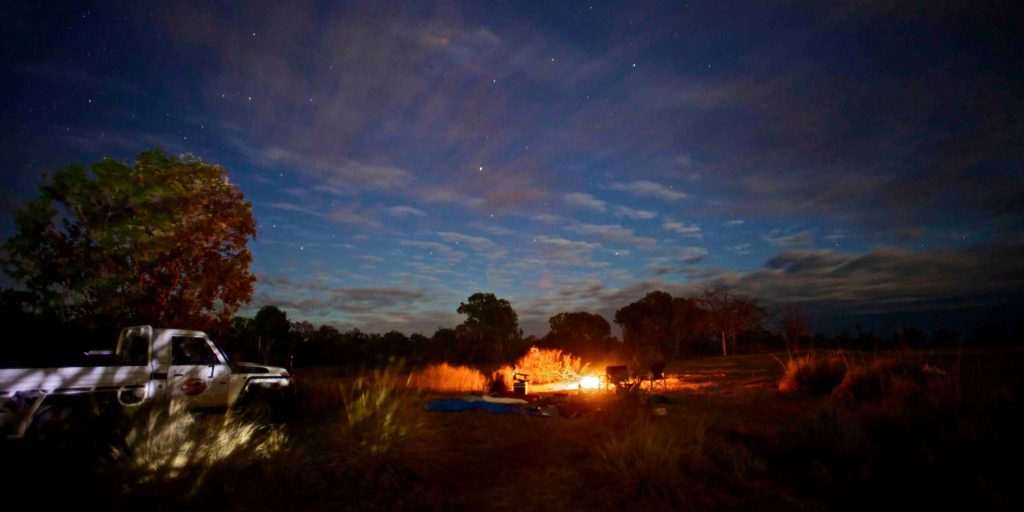 Travelling solo across remote Australia is disciplined work. Moore organises her vehicle with precision. First aid kit accessible. Fire extinguisher installed. Travel hours carefully considered.
“I know because I’m on my own, I’m a woman, I need to be prepared.”
The cracked phone screen becomes symbolic rather than catastrophic. The work will test you. It will exhaust you. But it also reveals strength.
Alongside her training schedule, Moore is building Boomerang Consultancy into a national platform. Through documentary mentorship and structured media support, she is developing the skills to document her journey and amplify community voices.
 Her website launches this week. She has committed to weekly blogs. She is filming sunrise messages before driving to her next community.
Prevention does not succeed quietly. It requires visibility as well as integrity.
Moore is not waiting for another inquiry or funding announcement. She is driving into communities, sitting in circles, equipping workers, engaging men and supporting women to heal.
“We need to stop harming people across our nation,” she says. “But we can do that together.”
In her vision, the stamping begins in the centre and radiates outward. Aboriginal leaders and non-Indigenous allies stand shoulder to shoulder. The ground carries the message.
If Australia is serious about reducing family violence, it will need more than policy reform. It will need culturally grounded leadership and practical training delivered with courage.
It will need women like Kyalie Moore.
And somewhere at sunrise, with the light steady and the wind calmer this time, she will keep filming, keep travelling and keep stamping.
Kyalie Moore is currently undertaking the BushTV Documentary Mentorship, strengthening her storytelling practice as she travels nationally delivering family, domestic and sexual violence training. If you are an emerging leader, consultant or organisation wanting to build narrative clarity and professional video presence, you can learn more about the BushTV Documentary Mentorship here.
No Comments