
Stamping It Out: From Survival to Systems Change
Yamatji family, domestic and sexual violence subject matter expert Kyalie Moore is taking her fight against Family, Domestic and Sexual Violence (FDSV) across Australia
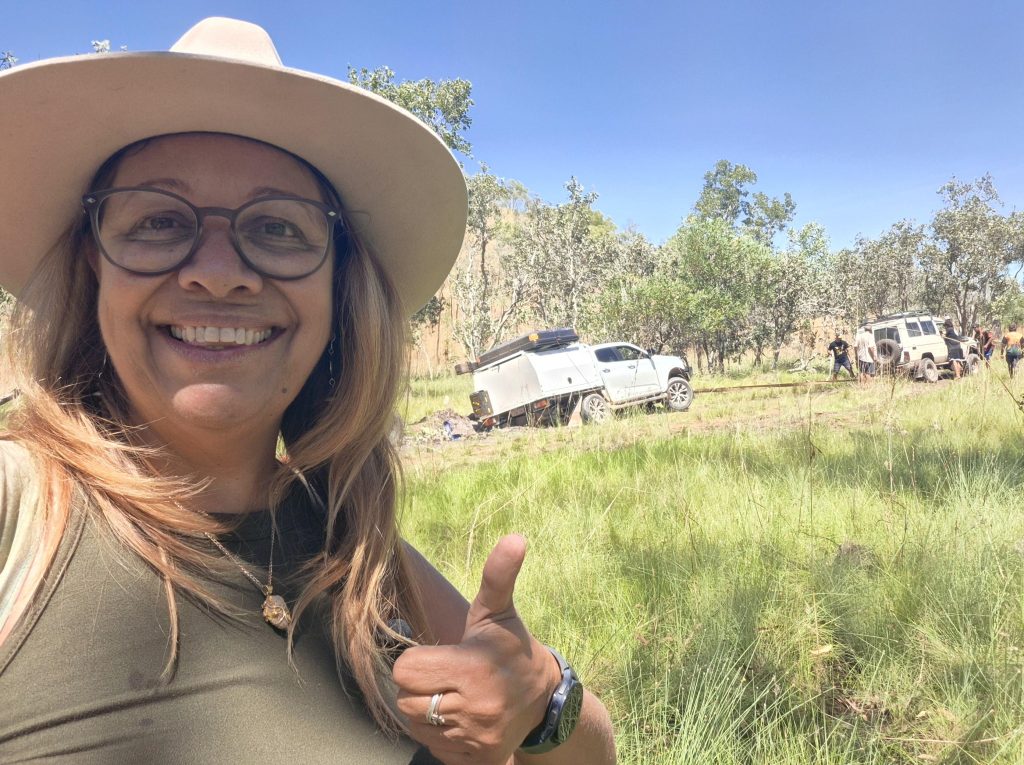
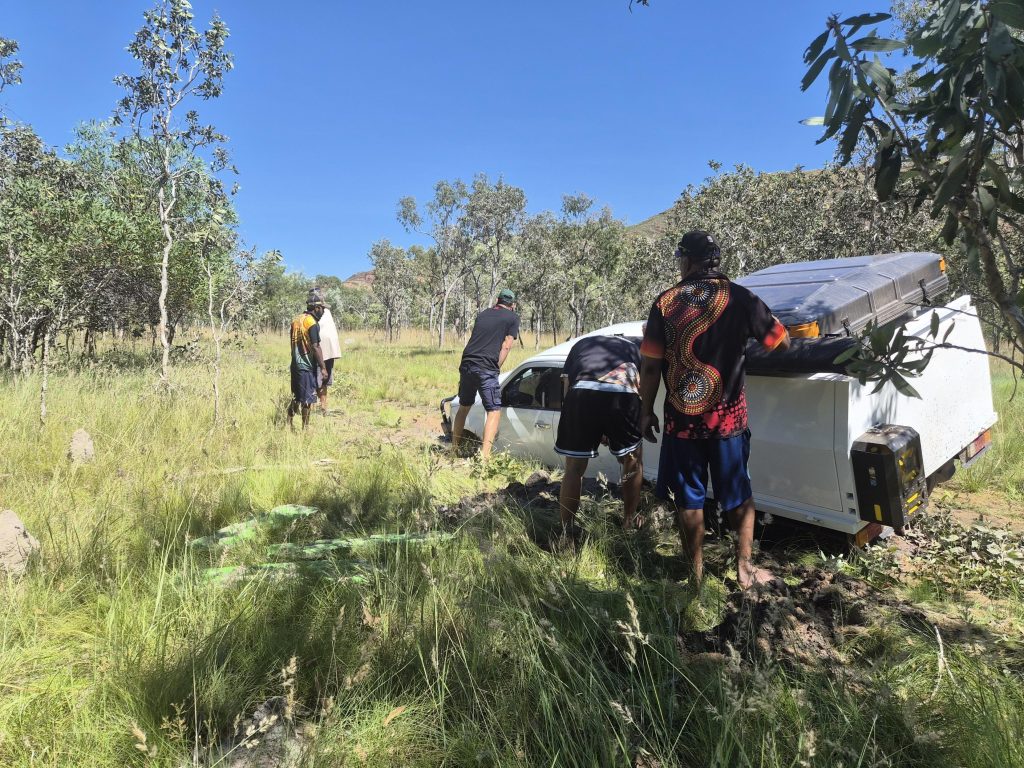
A few kilometres out from Dunham River, the road gave way. Soft mud. No warning. Kyalie Moore’s D-MAX sank deep, wheels spinning, the Kimberley heat pressing down as the reality set in, she was stuck, alone, and a long way from help. She did what she always does. Assessed the situation. Stayed calm. Reached out.
Within half an hour, help was on the way. By the next morning, a local crew had her back on the road.
It’s a small moment in a long journey. But it says something about the way she moves through the world. Prepared. Grounded. And unwilling to stop. Because this isn’t just a road trip. Kyalie is a proud Yamatji woman travelling community to community across Australia, working in one of the most complex and challenging spaces in this country, family, domestic and sexual violence. She is a counsellor, family therapist and Men’s Behaviour Change Program practitioner/trainers and supervisor with nearly two decades of experience. She has worked across community and custodial settings, supervised programs, trained frontline workers, and supported victim survivors across Western Australia.
Now, she is taking that work national.
“I’m going community to community,” she says. “Supporting services to strengthen their response to FDSV, working with men, and making sure families are safer.”
But her work is not abstract. It is lived. Kyalie grew up in Carnarvon. As a child, she experienced sexual abuse by multiple perpetrators before the age of fifteen. For many years, that trauma shaped her life through anger, grief, and moments of deep disconnection.
In her hometown, at an International Women’s Day gathering, she shared that story publicly for the first time.
“I hold space for people all the time. But in that moment, Carnarvon held space for me.”
That moment became a turning point.
Because Kyalie’s work sits in one of the hardest spaces in this country. It asks her to work with men who use violence, while holding deep respect for women, children, and families impacted by it. It requires her to sit in the tension between accountability and healing, and to do so in a way that is culturally grounded and community-led.
“You need to hear their stories,” she says. “And then help shift those narratives towards non-violence.”
Her campaign is called Stamp It Out.
To some, the name sounds forceful. To Kyalie, it is cultural.
“In our culture, we stamp. We stamp when we tell stories. We stamp when we call in the rain. It’s collective,” she says.
She imagines communities standing together, stamping their feet on Country, sending a message that FDSV has no place.
“If we want to stop family violence in our communities, we need to speak the language of our people.”
That philosophy underpins her work on the ground.
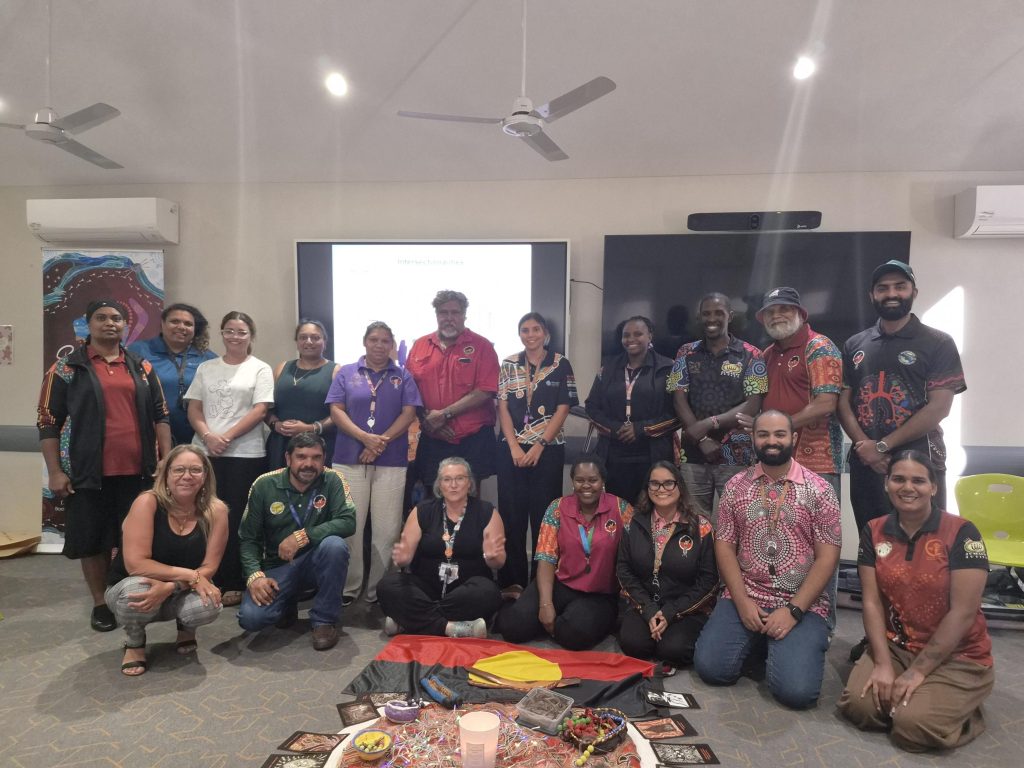
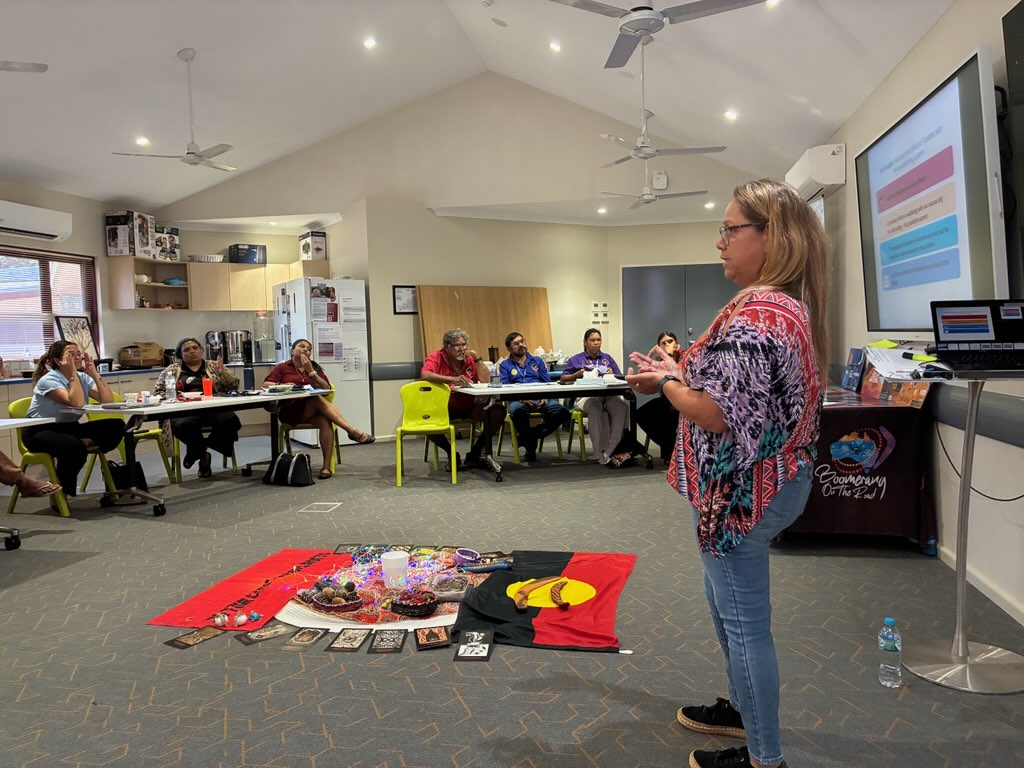
Kyalie is an accredited trainer in the internationally recognised Safe & Together™ Model, delivering CORE Training using First Nations strategies that centre culture, accountability, and family safety.
The training focuses on strengthening responses to family, domestic and sexual violence by:
– Identifying the impact of violence on children and family functioning
– Assessing perpetrator behaviour patterns using evidence-based approaches
– Partnering effectively with adult survivors
– Intervening with men who use violence
– Understanding intersections with substance use and mental health
– Participants don’t just learn theory. They practice it.
Through real case work, role play, and structured tools like Mapping Perpetrators’ Patterns and Multiple Pathways to Harm, frontline workers build practical skills they can apply immediately in their roles.
It is a four-day certified program, and for those who complete it, it can contribute toward becoming a Safe & Together Model Certified Trainer.
But what makes Kyalie’s delivery different is not just the model. It is the way she brings it to life. Her work integrates cultural knowledge, lived experience, and professional training into a single approach. She has also co-designed the Southern Cross Model with Aboriginal men, supporting culturally safe engagement with men who use violence, and is developing programs that enable Aboriginal organisations to lead this work themselves.
This is not fly-in, fly-out training.
It is relational. It is grounded. It is built on trust.
And it is happening now.
Kyalie is currently travelling across Australia through Boomerang Consultancy, moving from community to community, delivering training, listening, and building partnerships. Her journey has already taken her through Western Australia, including Halls Creek, Derby, Carnarvon and Kununurra, and she is now heading through the Northern Territory and into Queensland.
She is inviting Aboriginal Medical Services and community organisations to be part of that journey.
To host training. To build local capacity. To strengthen responses to family violence in ways that are culturally grounded and community-led.
Because the reality is this.
Across Australia, family, domestic and sexual violence continues to impact many Australians and Aboriginal communities at disproportionate rates. The need for effective, culturally safe, and locally driven responses has never been greater.
And the solutions already exist.
They exist in communities. In culture. In people like Kyalie Moore, who have lived it, studied it, and committed their lives to changing it.
“I’m starting to feel this sense of alignment,” she says.
That alignment is now moving across the country.
One community at a time. One conversation at a time. One step closer to safer families.
To connect with Kyalie Moore and explore training opportunities:
boomerang_consultancy@outlook.com
No Comments