
In Wadeye, women are leading the push for a road home
By mid-morning, the heat has already settled over Wadeye, pressing down on the red earth and corrugated rooftops. Inside a tin shed at the Wadeye Women’s Centre, a group of women sit together around a table. Some are talking, others listening. A kettle boils somewhere in the background. Children move in and out of the space. There is no sense of performance here, only the quiet steadiness of a place that has become, over time, a centre for connection, decision-making and care. This is where the conversation about the road begins.
Not in parliament, and not in policy documents, but here, in a space created by Palngun, women, for women. It is a place where voices are gathered and held, where ideas are worked through slowly, shaped by lived experience rather than imposed from outside.
Annunciata Wilson, from neighbouring Peppimenarti, leans forward slightly as she speaks, her tone calm but certain.
“We have many urgent priorities, but sealing the Port Keats Road would make the biggest difference right now to all our communities,” she says.
There is no pushback. Around the table, heads nod in quiet agreement. It is not a new idea. The need for a sealed road has been raised for years, spoken about by Elders long before this conversation. What feels different here is not the message, but the persistence behind it, and a growing sense that these voices, held together, carry weight.
“It is achievable,” Christine Tchemjiri adds. “And it would unlock many opportunities for our communities.”
One such opportunity occurred recently when the women travelled to Melbourne to attend the Women Deliver Conference, where they met with prominent human rights lawyer Jennifer Robinson.
-
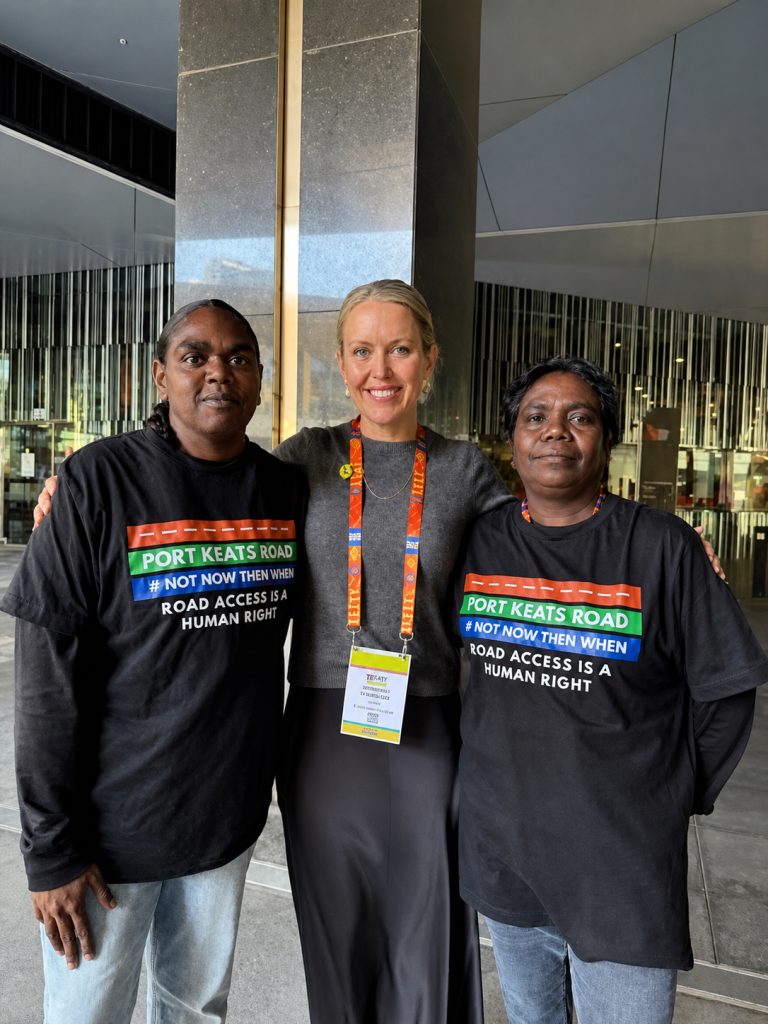
- In Melbourne, where they had the opportunity to meet with prominent human rights lawyer Jennifer Robinson.
-
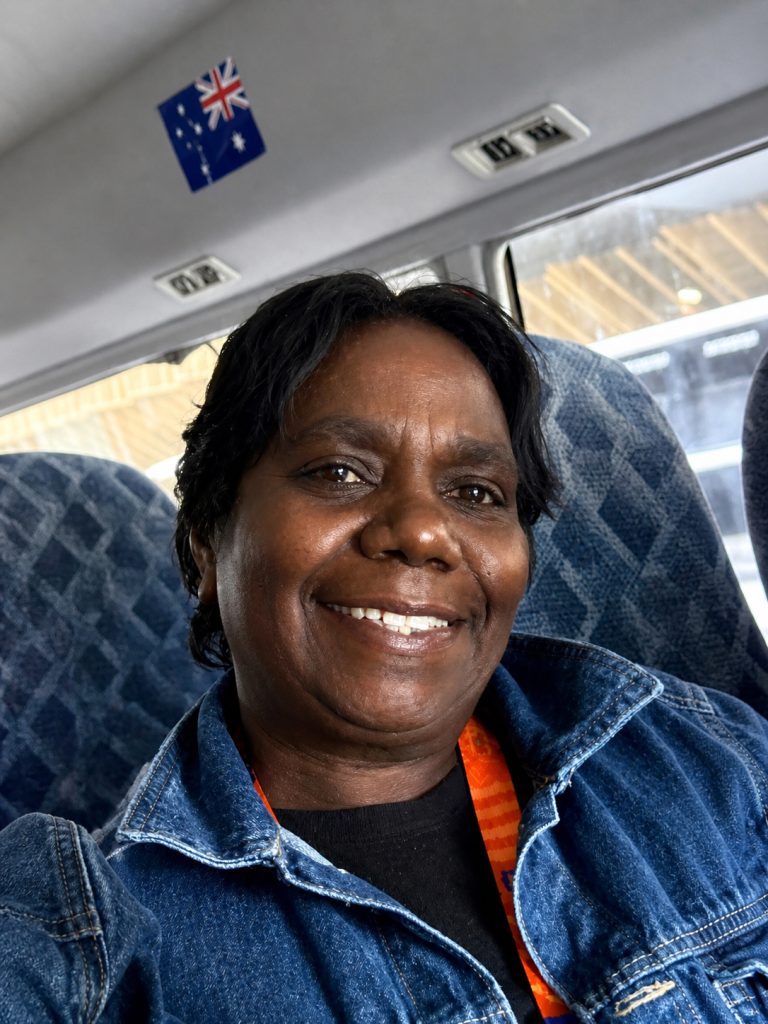
- Christine Tchemjiri Wadeye Womens Centre Working on Country Coordinator
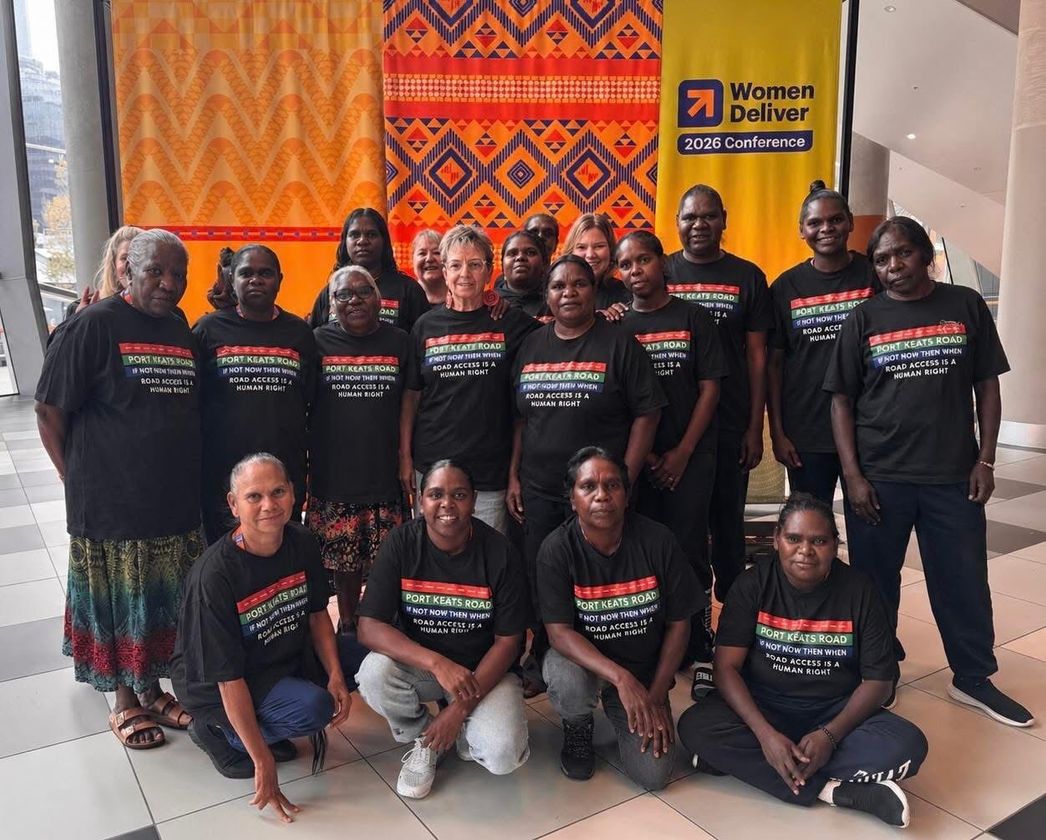
Women Deliver Conference 2026
Outside the shed, the red dirt track that connects Wadeye to the outside world stretches out across the landscape. For much of the year, it is the only way in and out. When the wet season arrives, that road disappears. The ground softens, breaks apart, and movement stops. When the road closes, so does everything else.
Access to health care becomes more difficult. Services are delayed or cancelled altogether. The internet goes down. People wait, sometimes for months, for things that others take for granted.
“Anyone would go stir crazy,” one local resident says.
Inside the Women’s Centre, the women return to this point often. Not as a complaint, but as a simple statement of fact. The road, in its current state, shapes the rhythm of life. When they talk about sealing it, they are not just talking about infrastructure.
They are talking about access, about continuity, about the ability to move when needed and not only when conditions allow. They are talking about what becomes possible when a community is no longer cut off.
“Year-round access would allow trades and essential services to come in more easily,” Tchemjiri says. “It would reduce the high cost of freight and improve access to food, health care, and supplies.”
But there is another layer to what they are saying, one that sits beneath the practical.
A sealed road would not just take people away from Wadeye. It would allow people to return, to homelands, to family, to places where identity is not under strain. It would ease the pressure that has built up in one place for too long, and begin to open the region to economic activity and opportunity that has long been out of reach.
The women are clear that housing is part of the solution too. Around 200 new homes are needed to ease overcrowding, something they have been calling for over many years. But they also know that will take time. The road, they say, is the first step. The piece that allows everything else to move.
Alice Kungiung speaks about that pressure in quiet terms.
“Everything builds up,” she says.
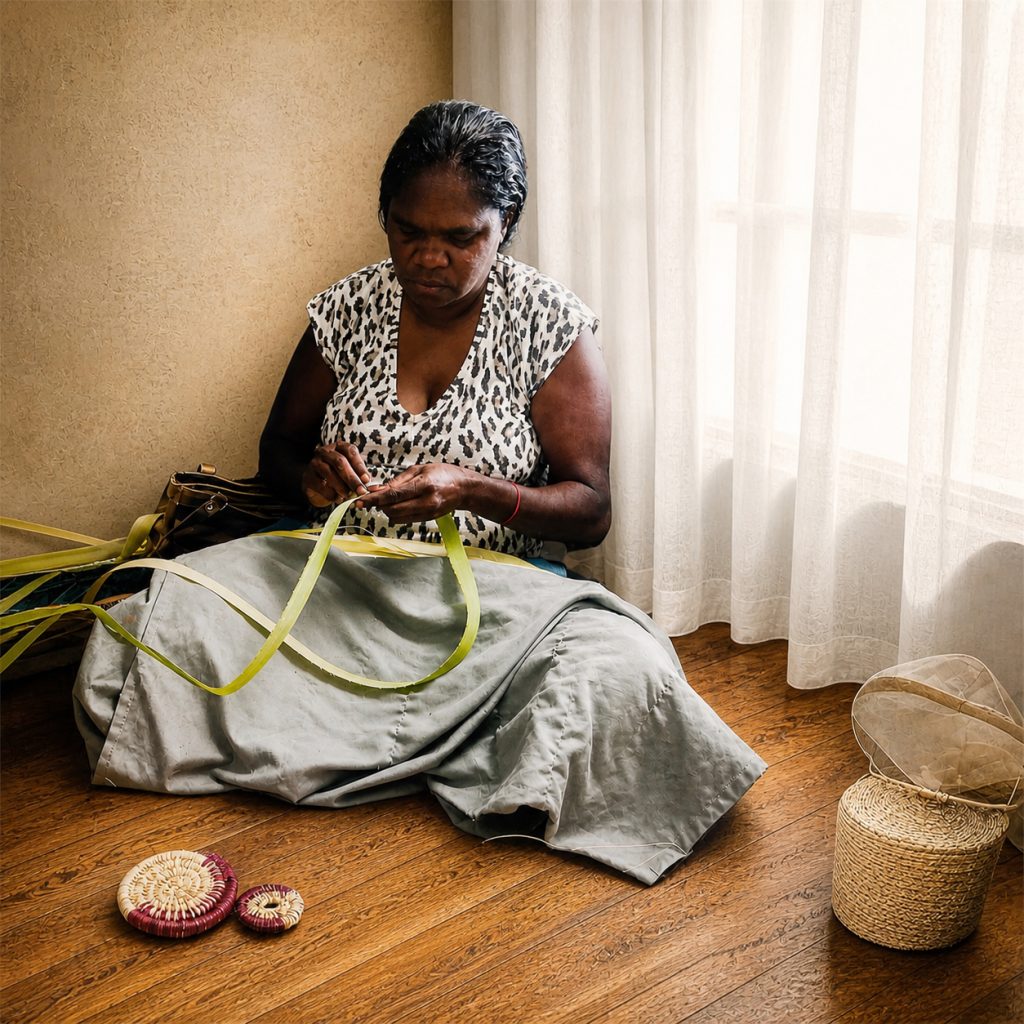
Alice Kungiung runs weaving workshops at the Wadeye Women’s Centre, and is the Activity Coordinator.
Across Wadeye, she knows overcrowded housing is a constant reality for her people. Homes built for small families now hold many more, stretching space, patience and well-being. Sleep is interrupted. Privacy is limited. The small tensions of daily life are magnified.
“People don’t get proper sleep,” she says. “When you are tired, it is hard to go to school, hard to focus, hard to keep a job.”
The impact is cumulative. Stress settles into families and, over time, begins to show itself in other ways.
“It creates stress, frustration and tension,” Tchemjiri says. “That pressure can lead to conflict and violence.”
At times, some turn to alcohol or drugs as a way of coping, but the women are clear that this only deepens the strain, feeding cycles that are already difficult to break.
In recent years, Wadeye has experienced periods of unrest that have drawn national attention. But inside the community, those moments are not seen as isolated events.
“They don’t happen out of nowhere,” a local says.
They are the visible expression of deeper, long-standing pressures, overcrowding, limited opportunities, and decisions made over generations without the necessary infrastructure to support them.
For the women gathered in the shed, these are not abstract issues. They are part of everyday life, shaping what is possible for their children and their families.
“Women and children feel this most,” Kungiung says. “Young people grow up seeing these challenges, and without change, the cycle continues.”
And yet, alongside these realities, there is something else present in the room.
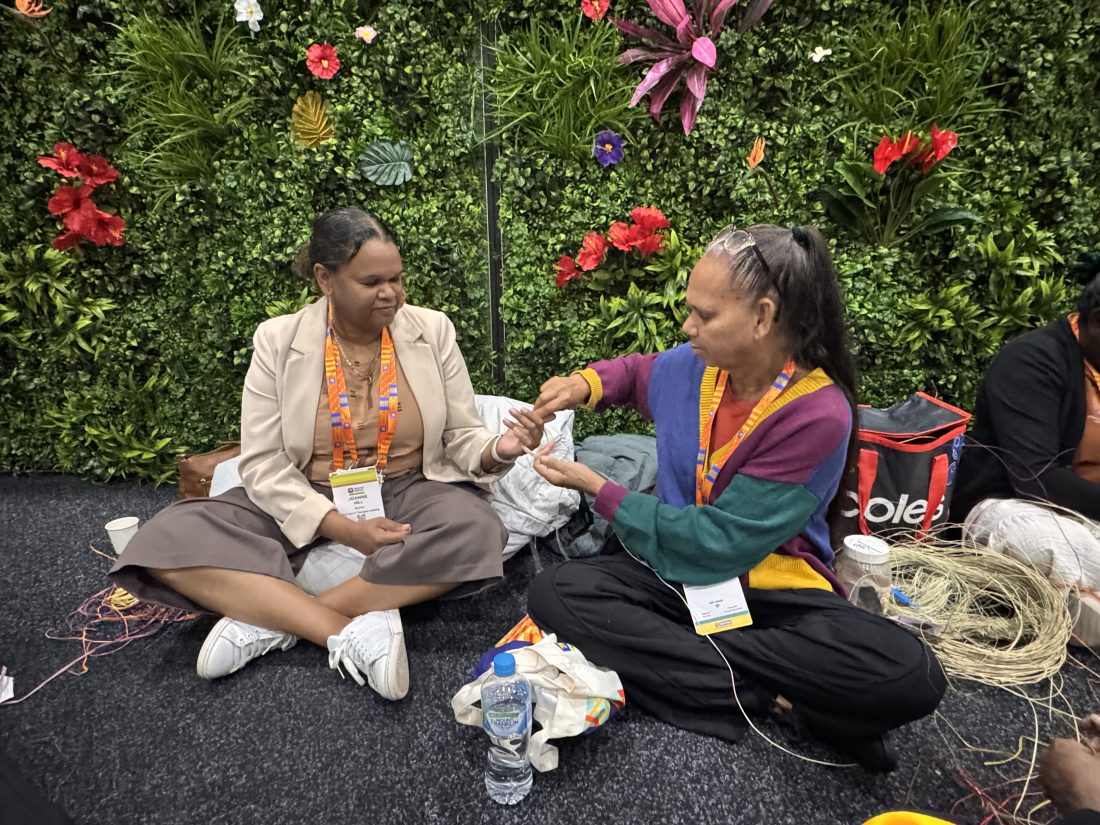
On a nearby table, artwork is spread out, colours and patterns that carry stories, memory and knowledge. Over the years, the Women’s Centre has become a place not only for discussion, but for learning, for cultural continuity, and for the quiet strengthening of confidence and leadership.
There is a sense here, not spoken directly but felt, that the act of coming together like this is building something. That these conversations, repeated and refined over time, are shaping a shared purpose.
“Our culture is our foundation,” Wilson says. “It keeps us connected to Country, which we see as our mother.”
That connection extends beyond the walls of the shed and into a broader system of cultural governance. The Thamarrurr region is made up of more than 20 clans, belonging to four main ceremonial groups, Wangga, Lirrga, Wulthirri and Tharnpa. Each group holds clear responsibilities for their land, which is held under the Daly River Port Keats Aboriginal Land Trust on behalf of Traditional Owners.
The name Thamarrurr, from the Murrinhpatha language, means “coming together to work as one people”. It reflects a structure that has long guided how decisions are made, through collective responsibility and respect for cultural authority.
Today, that structure continues through the Thamarrurr Development Corporation, which plays a central leadership and governance role across the region, supporting communities as they work towards stronger, more independent futures.
Inside the Women’s Centre, that same principle is visible in practice.
“Our ancestors are always with us,” Tchemjiri says. “We carry their knowledge. We are guided to show respect, to Country, to our Elders, and to one another.”
It is this grounding that holds direction, even when pathways are limited.
“When children and young people lose connection to culture and Country, that sense of responsibility fades,” Kungiung says. “That is why our advocacy is grounded in culture. Strong culture builds strong people, strong families and strong communities.”
For decades, Elders have spoken about a different way forward, one that allows families to live on their own Country rather than concentrating pressure in a single place.
“For more than 20 years, our Elders have said that building suburbs and overcrowding people would not work,” Wilson says. “They wanted families to live on their own Country.”
Those warnings were not acted on, and the consequences are now visible across the community.
“We are living with that now,” Tchemjiri says.
At the same time, the reasons often given for not supporting homelands have shifted. Technology now makes it possible to deliver services in ways that were not available in the past.
“The technology exists today,” Kungiung says. “Health care and education can reach people on Country.”
She pauses briefly before adding, “What is missing is the political will to listen and act.”
There is no anger in the way the women speak about government, but there is clarity. Since the current government was elected, they say, not one minister has visited Wadeye.
“Real partnership means sitting with us, listening to us, and taking action on what we are asking for,” Wilson says. “It is not just consultation. It is respect, trust and follow-through.”
The conversation continues around the table, steady and unhurried. The priorities remain clear: a sealed road, safer housing, and the ability for families to live on Country without the pressures they currently carry.
Behind this work is the Thamarrurr Aboriginal Women’s Council and the space they have built within the Women’s Centre. It is here that women come together to support one another, to strengthen wellbeing, and to ensure their voices are part of shaping the future of their community.
Supported by the Thamarrurr Development Corporation, the region’s central governance body, the women have been able to carry their advocacy beyond Wadeye and into the spaces where decisions are made.
Deputy CEO Tracy Leo has worked alongside them, helping to secure resources and support their efforts.
“I’m incredibly proud of the Women’s Council and the strength they show every day,” Leo says.
“They are standing up for their community, for their families, and for future generations. This is not just about a road, it’s about connection. It’s about giving people a safe way home, back to Country and Kin.”
Outside, the road remains unsealed. When the rains come, it will close again.
Inside the shed, the women keep talking, steady, deliberate, and certain of what needs to change.
“A road is not a pathway away,” they say. “It is a pathway home.”
Story by Tom Hearn
No Comments