
What We Carry – Sitting With Aunty Judy Atkinson
By Kyalie Moore
For more than 15 years I have worked across family, domestic and sexual violence. It is work I know professionally, but it is also deeply personal. I am a survivor of childhood sexual abuse, and over the years I have found myself asking more and more questions about where violence comes from, what we carry from one generation to the next, and what it really takes to heal.
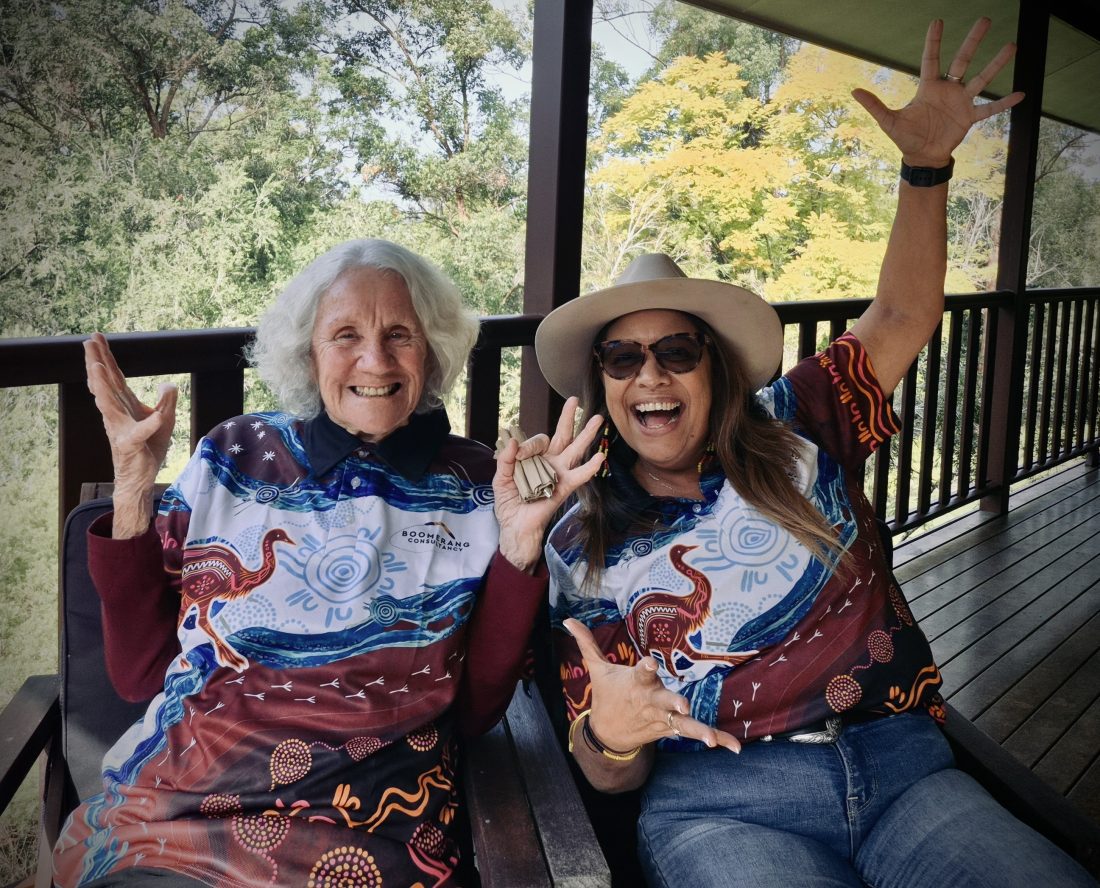
Recently, I had the privilege of sitting down with Emeritus Professor Aunty Judy Atkinson AM, a Yiman and Bundjalung woman whose life’s work has helped change the way we understand trauma, colonisation and healing in Aboriginal communities.
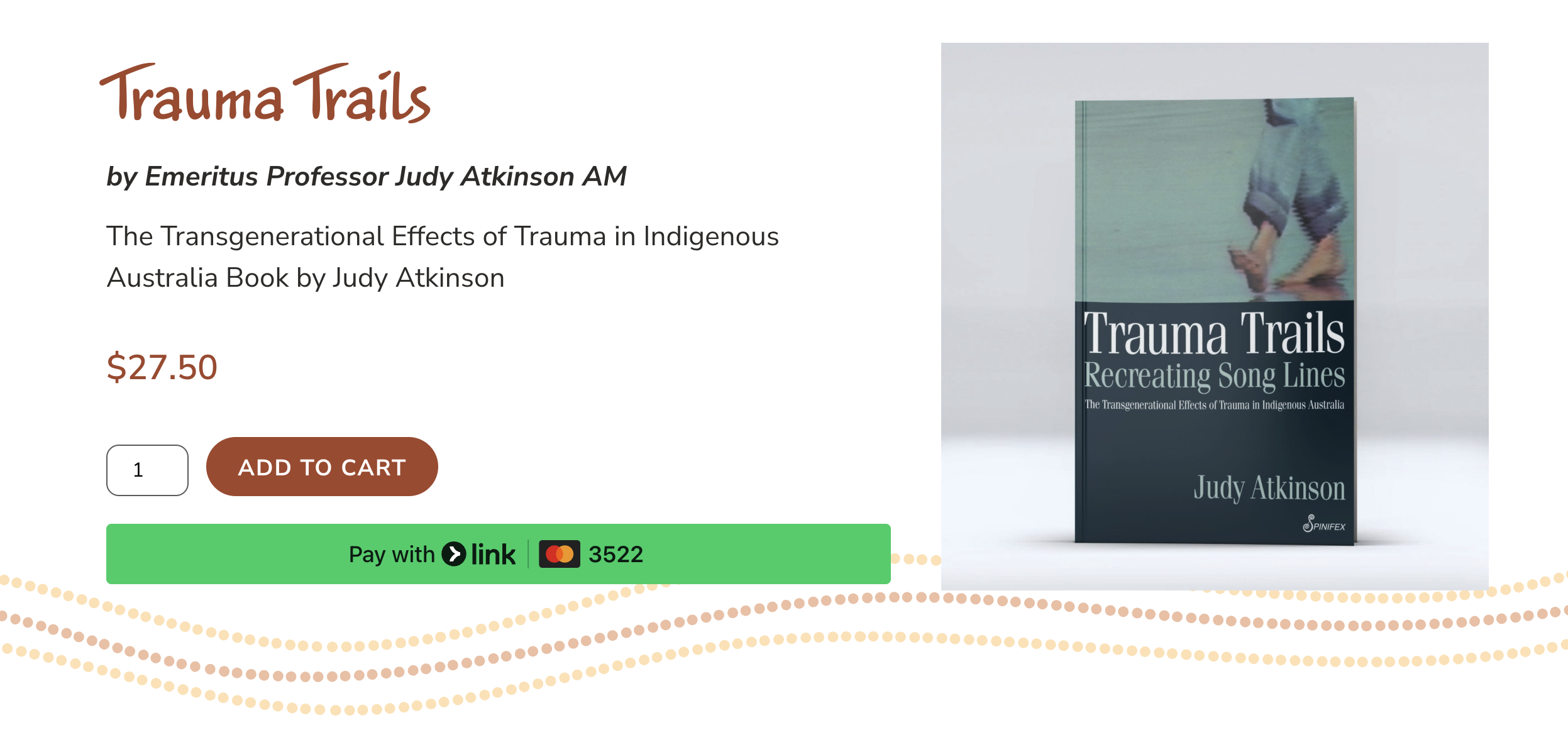
Aunty Judy is the founder and Patron of We Al-li and the author of Trauma Trails: Recreating Song Lines, a book that has been particularly important to me. Her work asks us to understand trauma not as something that begins with one person or one family, but as something that can travel through generations. Just as importantly, she reminds us that healing can travel through generations too.
I think that is why meeting her affected me so deeply.
During our conversation, she told me about being sexually abused as an eight-year-old girl and finding the courage to tell her mother. Her mother listened to her, believed her and took her to see their local doctor. Decades later, she thanked her mother for believing her that day, only to discover that her mother had also been abused as a child.
“You know that happened to me when I was a little girl too, but nobody would believe me,” her mother told her.
Aunty Judy looked at me as she finished the story and said something incredibly simple.
“My mother believed me.”
As a survivor myself, there was something profound about sitting with an Aboriginal woman in her eighties and hearing her speak so openly about what happened to her as a little girl, and about the different path her mother chose for her. Her mother had carried the experience of not being believed, but when it happened to her daughter, she changed something.
Our conversation moved through Aunty Judy’s extraordinary life and the years she spent travelling around Australia, sitting with people in communities and prisons and listening to stories of violence, trauma, shame, survival and healing. She told me about hearing stories so painful that members of the small film crew travelling with her would sometimes be crying, and they would have to decide who was okay to drive.
What stayed with me was Aunty Judy’s understanding of listening. She wasn’t talking about listening as something passive. She was talking about creating a space where people can finally tell the stories they have been carrying, and then asking what we can do together.
“What can we do about it?” she said to me. “I’ve said it three times now, what can we do about it? Well the first thing is we can listen.”
I left my time with Aunty Judy thinking deeply about my own journey.
For some time now I have wanted to write a book about what I have learnt through my lived experience and my years working in family, domestic and sexual violence. I have also been developing my first half-hour documentary called What We Carry.
The questions at the heart of the documentary are the questions I find myself carrying more and more: Where did it begin? What are we carrying? How do we break the cycle?
Sitting with Aunty Judy gave me even more confidence that these are questions worth pursuing. I don’t expect to find simple answers, and I don’t think that is the point. I want to travel, listen and learn from Elders, survivors, cultural knowledge holders, practitioners and people who have spent their lives working towards healing. I also want to bring my own story into that conversation.
Towards the end of our interview, Aunty Judy began joking about getting older and her memory not being what it once was. I reminded her that the stories were still there.
“You’re a storyteller,” I told her.
“I’m a storyteller,” she replied.
“And those stories are still there. And they’ll come back when you talk.”
I’ve thought about that little exchange a lot since.
Perhaps part of my own journey now is accepting that I am becoming a storyteller too. I have things I have carried, things I have learnt and questions I still need to ask. Meeting Aunty Judy reminded me that there is power in telling those stories, but there is just as much power in being prepared to sit quietly and listen when someone else tells theirs.
That is the journey I want to take with What We Carry, and I think I am finally ready to begin.
R S
September 10, 2026 at 8:30 pmVERY INTERESTING