
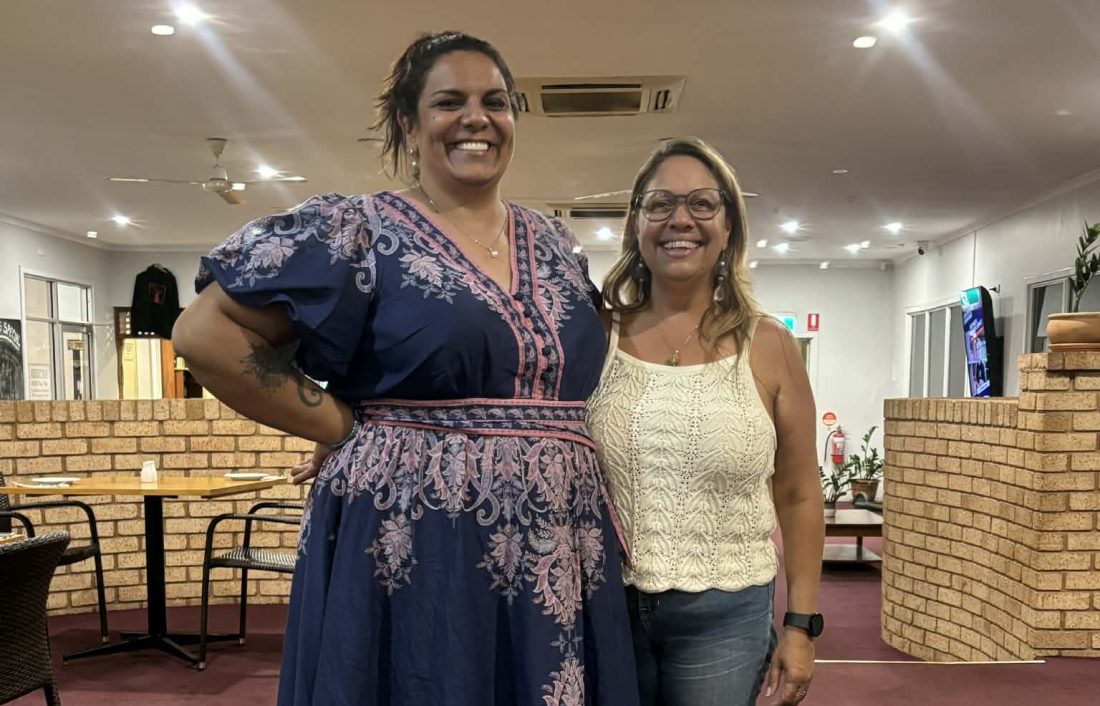
Women Leading Change
How Trish Gault, Kyalie Moore and Aboriginal organisations are transforming responses to family violence.
There are places in Australia where family and domestic violence is not simply a statistic. It is woven into everyday life, affecting mothers, children, grandparents and entire communities. The violence itself is devastating, but it rarely exists in isolation. It is often intertwined with poverty, homelessness, alcohol and other drug misuse, poor mental health, and the enduring impacts of intergenerational trauma. For many women and children, escaping violence is only the beginning of a much longer journey towards safety, stability and healing.
Across the Kimberley, Aboriginal women have been leading that journey for decades.
Long before governments began speaking about trauma-informed practice and wraparound care, women in Derby understood that families needed more than emergency accommodation. They needed people who would walk beside them, not just through the immediate crisis, but long afterwards. They needed culturally safe places where healing could begin, where children could feel secure, and where women could rebuild their confidence, independence and hope for the future.
Today, one of the strongest examples of that vision is Marnin Bowa Dumbara Family Healing Centre. Last year the organisation celebrated thirty years of service, marking three decades of standing alongside women and children experiencing family and domestic violence throughout the Kimberley. What began as a conversation between local women determined to create a safer future has grown into one of Australia’s most respected Aboriginal-led healing organisations.
Leading that work is Chief Executive Officer Patricia (Trish) Gault, whose vision has helped reshape the organisation from a traditional women’s refuge into a comprehensive Family Healing Centre. Under her leadership, Marnin Bowa Dumbara has expanded well beyond crisis accommodation, recognising that while emergency support can save lives, it is sustained healing that ultimately changes them.
That commitment to long-term healing has recently been reflected in one of the organisation’s most significant achievements. After four years of planning, Marnin Bowa Dumbara has purchased its first property, securing a permanent home for the organisation and laying the foundations for future expansion. The milestone is about far more than owning a building. It represents permanence, stability and confidence that this work will continue for generations to come.
“It was a four-year dream,” Trish says. “The organisation was able to purchase its first property asset portfolio. I’m incredibly proud of that.”
The new premises will enable the organisation to expand its programs, strengthen its workforce and reduce waiting lists, ensuring more women and families can access support when they need it most. It is a milestone that reflects not only careful leadership, but also the trust Marnin Bowa Dumbara has built over three decades within Derby and across the wider Kimberley.
Yet if you ask Trish about the future, she rarely talks about buildings.
She talks about people.
When she first joined the organisation, one question continued to trouble her. Women would arrive at the refuge in crisis. They would receive support, stabilise, and eventually leave. But what happened once they returned home? Who continued walking beside them? How could the cycle of violence truly be broken if support ended when the crisis did?
Those questions fundamentally changed the way the organisation approached its work.
“I personally hold the belief that family and domestic violence is actually a symptom,” Trish explains. “When we pull the layers back, we’ll find there are so many other complex traumas built upon layer upon layer upon layer.”
Rather than viewing family and domestic violence as a single event, Trish began to see it as part of a much broader story. The violence was often the visible expression of deeper wounds, many carried across generations. Healing, therefore, could never end when a woman left the refuge. It had to continue long afterwards, supported by relationships, community and opportunities to rebuild a life.
That philosophy has shaped everything Marnin Bowa Dumbara does today. Alongside crisis accommodation, the organisation now provides counselling, mobile outreach, advocacy, parenting support, therapeutic programs, community education and long-term wraparound care. Staff intentionally create what they describe as “soft entries” into healing through community lunches, art programs, outreach visits and regular check-ins that feel less like formal services and more like genuine human connection.
The organisation has also recognised that healing extends beyond the women and children who walk through its doors. Strong communities require confident practitioners, informed leaders and connected services. In response, Marnin Bowa Dumbara has developed an extensive community training calendar, bringing specialist education directly to Derby. Programs such as Mental Health First Aid, Safe & Together™, Protective Behaviours and perpetrator mapping are helping build capability across the region, strengthening the broader response to family, domestic and sexual violence.
It is here that Trish’s work intersects so naturally with another Aboriginal woman who is helping reshape the national conversation.
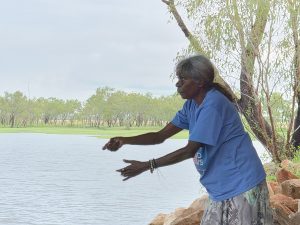
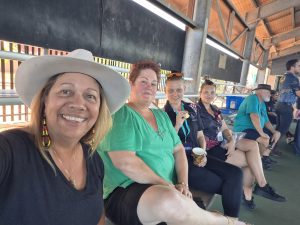
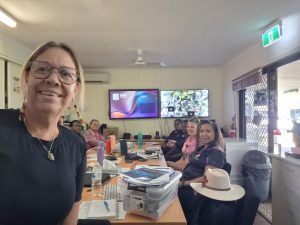
Kyalie Moore, a proud Yamatji woman and founder of Boomerang Consultancy’s Stamp It Out campaign, has spent nearly two decades working in one of Australia’s most challenging professional spaces. As a counsellor, family therapist and Men’s Behaviour Change practitioner, trainer and supervisor, she has supported victim-survivors, worked alongside Aboriginal men seeking to change violent behaviours, supervised practitioners and trained frontline workers across Western Australia.
Today, she is taking that work across the country.
Travelling community by community, Kyalie is working with Aboriginal Community Controlled Organisations, government agencies and frontline services to strengthen culturally safe responses to family, domestic and sexual violence. Through the internationally recognised Safe & Together™ Model, she helps organisations better understand the impact of violence on children, improve partnerships with victim-survivors, recognise patterns of perpetrator behaviour and develop coordinated responses that place family safety at the centre of every decision.
What makes Kyalie’s work distinctive is that she does not arrive with ready-made answers.
Her approach is built on listening first.
On recognising the knowledge that already exists within communities.
On strengthening Aboriginal leadership rather than replacing it.
Her campaign, Stamp It Out, reflects that philosophy. The name is drawn from culture itself.
“In our culture, we stamp,” she says. “We stamp when we tell stories. We stamp when we call in the rain. It’s collective.”
It is a powerful image. Communities standing together on Country, stamping their feet as one, declaring that family, domestic and sexual violence has no place in the future they are creating for their children.
Kyalie’s work complements the leadership taking place at Marnin Bowa Dumbara. While Trish and her team walk beside women and children as they rebuild their lives, Kyalie is helping strengthen the systems surrounding them. One is focused on healing after violence. The other is helping communities intervene earlier, respond better and ultimately prevent violence from occurring in the first place.
Together, they represent something much bigger than two organisations.
They represent Aboriginal women leading Aboriginal solutions.
Across Australia there is increasing recognition that lasting change cannot be imposed from outside. The strongest responses emerge when communities are trusted to lead, when culture is recognised as a source of strength, and when organisations are supported to build their own capacity rather than rely on fly-in, fly-out expertise.
Both women understand this deeply.
They know that healing is rarely dramatic. More often it happens quietly, in conversations over a cup of tea, through an outreach visit, during an art session, at a community training workshop or around a yarning circle. It happens when someone feels safe enough to ask for help, and when there is someone there to keep walking beside them long after the immediate crisis has passed.
The work is demanding. The Kimberley continues to face some of Australia’s most complex social challenges. Women continue to flee violence. Children continue to carry trauma. Communities continue to navigate homelessness, mental ill health, substance misuse and the long shadow of historical disadvantage.
Yet despite those realities, hope remains remarkably strong.
When asked what keeps her going after years on the frontline, Trish does not speak about awards, funding or recognition.
She speaks about children.
“I’m one of those people who takes up that flag to change the future of this little person – and all the little persons – not just here in our community, but globally.”
Perhaps that is the real story unfolding in Derby and in communities across Australia.
It is not simply the story of a refuge celebrating thirty years. Nor is it only the story of a national training campaign.
It is the story of Aboriginal women choosing to lead with courage, compassion and vision. Women building organisations that are strong enough to support future generations. Women challenging systems while never losing sight of the individual lives at the centre of their work.
Thirty years ago, a group of women gathered because they believed Derby deserved a safe place for women and children.
Today, that vision has become one of Australia’s most respected Aboriginal-led Family Healing Centres. With a permanent home, an expanding workforce and strong partnerships with leaders like Kyalie Moore, Marnin Bowa Dumbara is demonstrating what becomes possible when communities are trusted to design their own future.
The greatest measure of that success will never be found in a building or an annual report.
It will be found in the woman who rediscovers her confidence, the child who grows up knowing safety instead of fear, the man who chooses a different path, and the community that continues to believe healing is possible.
Story by Tom Hearn
To contact Kyalie Moore about her services, visit her website
https://www.boomerangontheroad.com.au/
For more information about the Marnin Bowa Dumbara Family Healing Centre visit their website
https://www.mbdfhc.org.au/
No Comments